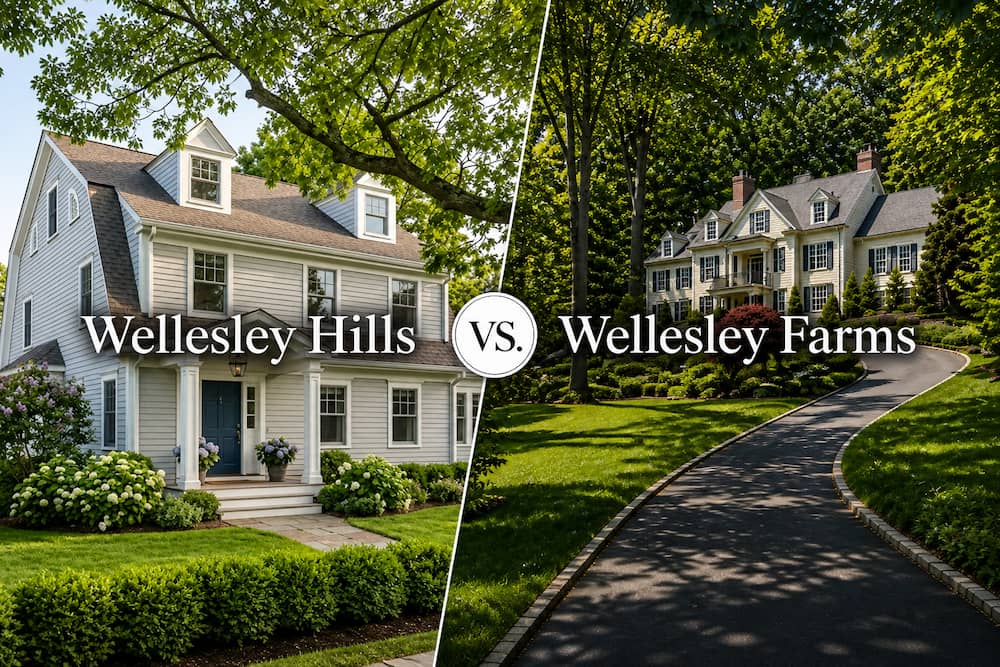
The distinction between Wellesley Hills and Wellesley Farms is not just geography—it’s a choice between a more connected, village-cenhttps://theteamcoyle.com/wellesley-ma-real-estate/wellesley-farms-wellesley-hills-ma/tered lifestyle and a quieter, more private setting shaped by landscape. Both are highly desirable, but they offer fundamentally different day-to-day experiences. One is defined by access, convenience, and proximity to town amenities. The other is defined by space, topography, and a sense of separation from the street.
The Daily Rhythm: Connectivity vs. Retreat
The difference becomes clear in how each neighborhood lives from day to day.
Wellesley Hills: The Connected Hub
Life in Wellesley Hills is shaped by its proximity to Washington Street, the Hills station area, and Linden Square. It is a neighborhood where daily errands, train access, and local services are closely integrated. Grabbing a morning coffee at Caffè Nero, walking to the train, or heading out by car can all happen without much friction.
The Vibe: Established, active, and village-centered.
The Nuance: The housing stock offers a broad mix of Colonials, Tudors, and newer construction, giving buyers more flexibility across price points and styles.
Daily Flow: The tradeoff is intentional—less privacy than more secluded parts of town, but a more connected, convenient day-to-day experience.
Wellesley Farms: The Quiet Retreat
Wellesley Farms offers a distinctly different setting, defined more by landscape than by retail. Homes are often set back from the road, surrounded by mature trees and natural topography that creates a greater sense of privacy.
The Vibe: Quiet, wooded, and more residential in feel.
The Nuance: The neighborhood’s layout—winding roads, elevation changes, and deeper setbacks—creates a setting that feels less structured and more organic than other parts of town.
The Commute Edge: The Farms station is known for one of the shorter scheduled rail trips into Boston, and many commuters value its efficiency as part of their routine.
The Setting: With destinations like Rockridge Pond and the Crosstown Trail, the appeal here is tied more to outdoor space and environment than proximity to shops or services.
By the Numbers: Key Differences
For a clearer side-by-side breakdown, here’s how the two neighborhoods compare across the factors that tend to matter most to buyers.
| Feature | Wellesley Hills | Wellesley Farms |
|---|---|---|
| Character | Established & Convenient | Pastoral & Secluded |
| Median Sale Price | $1.93M YTD 2026 |
$1.975M Recent 5 sales |
| Upper Price Range | Moderate-High | Very High (estate-scale upside) |
| Architecture | Colonials, Tudors & Newer Construction | 1920s Tudors & Shingle Style |
| Lot / Landscape | 0.25–1.0 acres | 0.4–1.0+ acres |
| Commute | Flexible driving & train access | Fastest rail trip to Boston |
| Topography | More traditional neighborhood pattern | Hilly, wooded, and private |
| Lifestyle Amenities | Linden Square, Hills station, everyday services, more connected daily routine | Rockridge Pond, Crosstown Trail, wooded setting, quieter residential feel |
Notes:
- Pricing note: Wellesley Hills pricing is based on MLSPIN year-to-date market data as of April 9, 2026. Wellesley Farms pricing reflects Redfin February 2026 neighborhood housing data with 5 homes sold. The range shown for Wellesley Farms on related neighborhood pages is a ±5% presentation band around the reported monthly median sold price.
- Architecture note: Architecture reflects dominant housing character and common home styles, not a complete architectural inventory.
- Landscape note: Lot and landscape reflect typical neighborhood patterns and not every property in the area.
- Upper price range note: Median prices are relatively close, but the upper end of the market in Wellesley Farms generally extends higher, especially where larger wooded lots and estate-style homes come into play.
For buyers deciding between the two, these are usually the questions that matter most in practice.
Frequently Asked Questions
Which neighborhood is better for daily errands and walkability?
Wellesley Hills is the clearer choice for day-to-day convenience. Its relationship to Washington Street and Linden Square makes it easier to walk to the train, pick up coffee, run errands, or meet friends for dinner. Wellesley Farms is more residential and generally more car-dependent for everyday needs.
Which neighborhood is better for Boston commuters?
It depends on the type of commute you want. Wellesley Farms is known for one of the shorter scheduled rail trips into Boston. Wellesley Hills, however, offers a more flexible setup for buyers who want both train access and easier day-to-day driving.
Which neighborhood offers more privacy?
Wellesley Farms. The combination of deeper setbacks, mature tree cover, and a lower-density feel generally creates more separation between homes than buyers typically find in the Hills.
Which neighborhood reaches higher price points at the top of the market?
Wellesley Farms. Although the median pricing is relatively close, the upper end of the market in Farms tends to stretch higher, especially where larger wooded lots and more secluded estate-style homes come into play. Wellesley Hills generally offers more flexibility across styles and price points.
Which neighborhood feels more traditionally “Wellesley”?
Both do, but in different ways. Wellesley Hills feels more village-centered and connected to the daily flow of town life. Wellesley Farms feels more pastoral, established, and quietly prestigious.
The Bottom Line
If you want a more connected, village-centered lifestyle with easier access to shops, services, and commuter options, start with Wellesley Hills. If you want a quieter, more private setting with a stronger sense of landscape and retreat, Wellesley Farms is likely the better fit.